
Searching LaSalle Parish Criminal Dockets
District-level criminal matters in the parish belong to the Twenty-Eighth Judicial District Court of Louisiana. The Clerk of Court keeps the district criminal record itself. The eClerks LA Criminal Search route is the first stop for qualifying minute entries. Louisiana requires electronic access to certain minute entries or summaries for cases filed on or after January 1, 2020. The route skips traffic. It is not a full archive. Before searching, gather a few details. Have the defendant name, any case number, the filing year, and the court level. LaSalle publishes no guide to its case-number format.
Is the online result unclear or missing? Call the Clerk at 318-992-2158 to ask about the record path. The 28th JDC takes setting questions at 318-992-2002. The Clerk also takes requests in person at the courthouse, by mail at P.O. Box 1316, Jena, LA 71342, by fax at 318-992-2157, and through its contact form. A narrowly written public-records request works too. Since no official source confirms a public terminal, ask whether inspection happens at a staffed counter or a machine before you make the trip.
- Open the eClerks LA service page and choose the Criminal Search route.
- Search the available criminal minute-entry information using the identifiers the live portal accepts.
- Save the case number, filing date, and entry description from a likely match.
- Check the 28th JDC calendar or call the court if the immediate need is a current setting.
- Ask the Clerk for a minute entry, plain copy, certified copy, or an older record when the online result is not enough.
Note: An online hit is only the start of the court record. It never replaces the Clerk's certified copy.
LaSalle Parish Criminal Minute-Entry Access
Remote criminal minute-entry access for LaSalle Parish runs through the LCRAA portal. That service is separate from the civil, family, probate, land, and marriage index on the Statewide Portal. What can the public see? For a qualifying criminal case, the information can include the arrest or summons, the bail decision, charge activity, hearings, decisions, the sentence, proceeding dates, the judge, the prosecutor, and the defendant. It does not promise every pleading or image. A missing result can mean several things. It may be a pre-2020 case, one not yet transmitted, a restricted case, a traffic matter, or a record held by a different court.
Where do you log in? The LCRAA portal entry shows the current login and registration destination for the criminal access service.
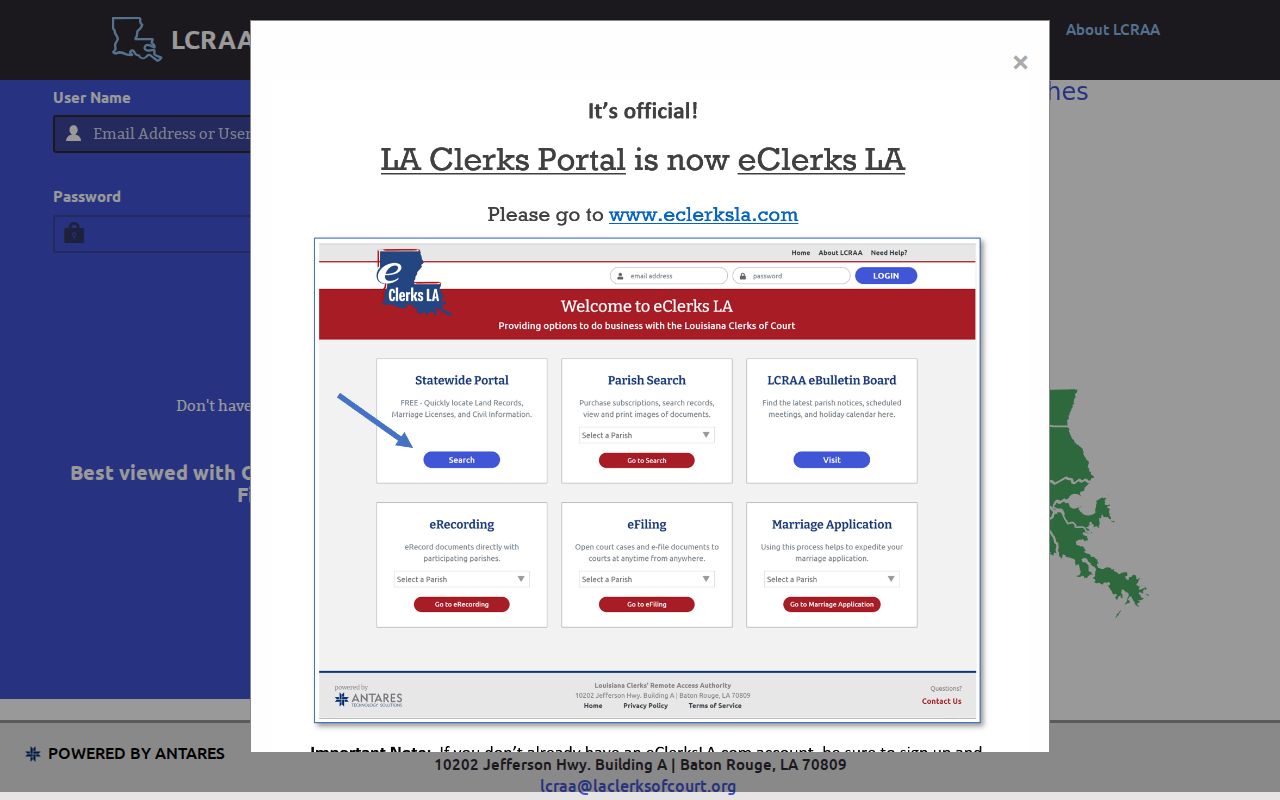
Let the portal identify the case and its events. Then carry those identifiers to a direct request at the LaSalle Parish Clerk of Court.
Inside a LaSalle Parish Criminal Docket
A criminal docket is the court's chronological record of a case. It is not a story. The top of the entry carries the basics. It usually names the court, the filing date, the caption, the judge, the case type, and the status. Below that comes the event list. Expect an information or indictment, a custody or bail decision, an arraignment, motion or status hearings, a plea, a trial, and a sentence. The statutory criminal feed relies on minute entries or summaries. Read the dates in order. Never treat one hearing entry as proof the case has ended.
| Case number | The clerk's locating identifier. LaSalle publishes no format guide, so preserve the exact case number shown on a notice or result. |
|---|---|
| Charge activity | Filing, amendment, or dismissal of a charge, often with the event date. |
| Minute entry | A clerk record or summary of what occurred at a proceeding, rather than a guarantee of a full document image. |
| Setting | A scheduled appearance, such as arraignment, motion hearing, pretrial, trial, or sentencing. |
| Disposition | The outcome shown by a final decision, plea, conviction, acquittal, dismissal, or sentence entry. |
The criminal minute-entry statute identifies the public information that qualifying electronic access can include.
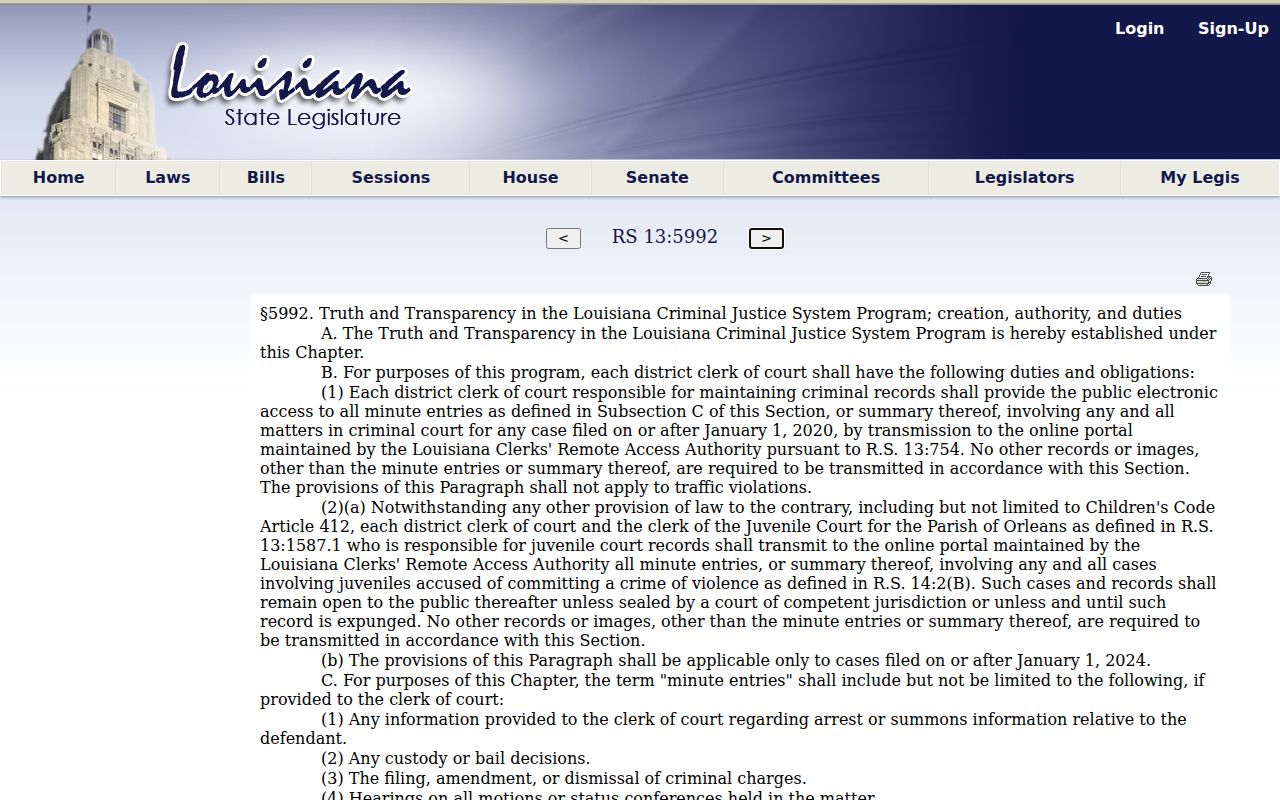
That field list shows why an online result helps you track an event. It still falls short of the underlying filing.
LaSalle Parish Criminal Docket Terms
LaSalle publishes no local glossary of docket codes. So treat any abbreviation as a prompt to confirm with the Clerk. It is not an official code. Plain-language terms are safer when you read a minute-entry summary. A plea, for instance, is just a response to a charge. A disposition is the final result or status. A continuance or reset simply moves a date. Each differs from the order or judgment that may come later.
- Arraignment
- A criminal proceeding where the charge, plea, and rights are addressed.
- Minute entry
- The clerk's record or summary of the proceeding.
- Bond or bail
- A release condition or financial decision that can appear in custody history.
- Disposition
- The result of a case or count, such as dismissal, conviction, acquittal, or a plea-based outcome.
- Reset
- A moved setting. Check for the later entry before relying on an older date.
eClerks LA describes its statewide history and services through its official background page.
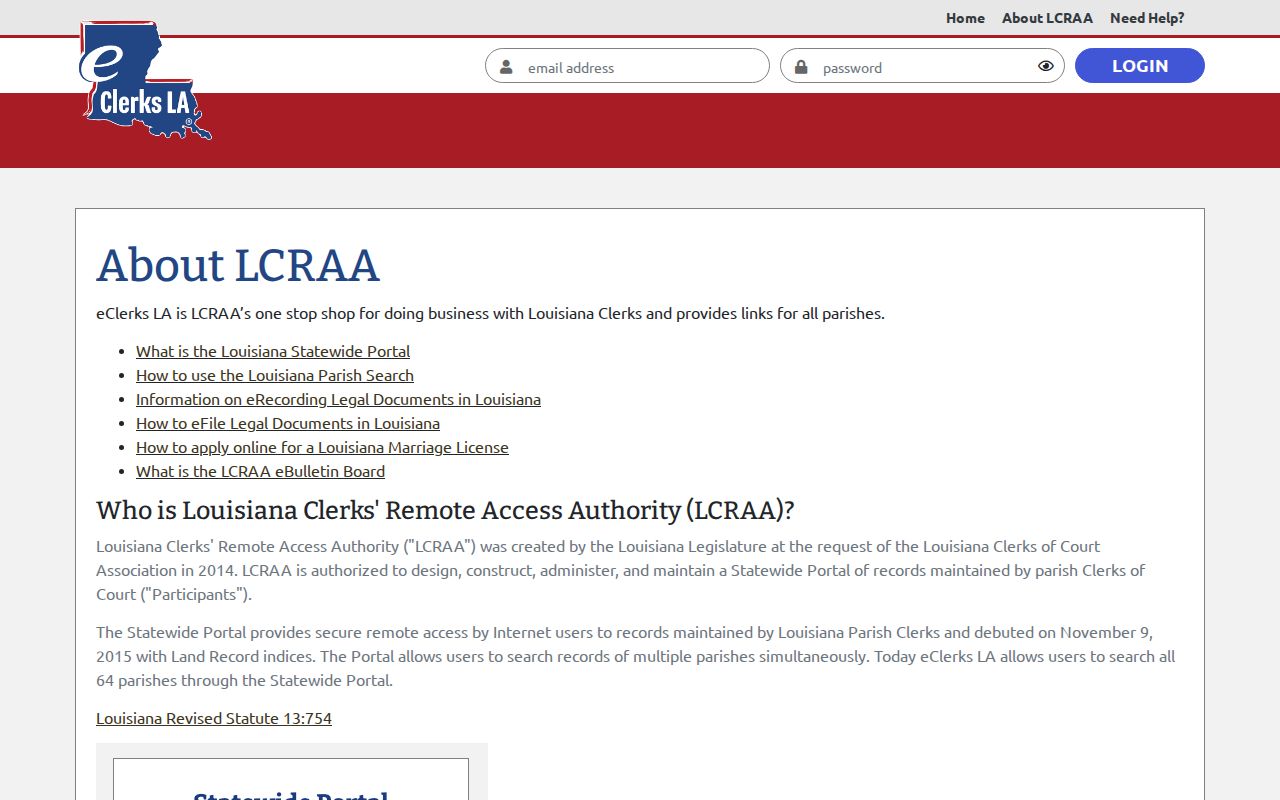
Statewide infrastructure supports access. It still cannot supply a local code legend that LaSalle never published.
How a Criminal Case Moves
A LaSalle Parish criminal docket usually unfolds in stages. The charge is filed, the person appears or is arraigned, and the court works through motions, pretrial matters, a plea or trial, and any sentence. The statutory minute-entry inventory covers the milestones. Expect charge filing or dismissal, motion and status hearings, trial or adjudication, court or jury decisions, and sentencing. A guilty plea is not the same as a sentence entry. A not-guilty plea, likewise, does not by itself establish a final acquittal. Read the older entries along with the newest one.
Docket flow: Charge Filed › Arraignment › Pretrial › Plea or Trial › Disposition › Sentencing
Court dates can move. The weekly calendar is not final notice of a new setting. Compare the last minute entry with the calendar, then confirm with the judge's office or the Clerk.
LaSalle Parish Criminal Docket Gaps
A blank docket search does not always mean the case is missing. Start with the court and the category. Traffic cases sit outside the electronic criminal minute-entry rule. A traffic ticket will not show up there. A town ordinance matter may live with the issuing town or the Jena Mayor's Court instead. Justice-of-the-peace cases belong to the justice district involved. All five LaSalle justice districts hold committing-magistrate powers. Yet the parish offers no single public docket portal covering them. An older case helps explain gaps too. A pre-2020 filing, a paper file, a sealed record, a juvenile matter, or a slow transmission can each leave a search empty.
Call the Clerk with key details. Give the name, the filing year, the court, and any case or booking details. Ask straight out whether the record is district criminal, traffic, juvenile, restricted, or held somewhere else. The Clerk's posted fees are simple to list. They run $20 for a search, $1 per page for plain copies, $5 plus $1 per page for certified copies, and $5 for a minute entry. Nothing local publishes a turnaround time or a remote-payment rule. So confirm payment and delivery by phone before mailing anything.
Note: Old paper or microfilm records may still need a clerk search even when a newer electronic route exists.
Courts That Hold Criminal Dockets
Felony criminal matters in LaSalle Parish start in the 28th JDC. That court covers the whole parish with one judge. The LaSalle Parish Clerk of Court keeps the district criminal file and the minute entries. Scheduled proceedings appear on the court calendar, which is its own source. A hearing question can go to the judge's office. It sits at 1050 Courthouse Street, Room 4, Jena, and takes calls at 318-992-2002. The Clerk works out of the same courthouse at 1050 Courthouse Street.
Not every criminal event lands in that district docket. The five justice districts act as committing magistrates. Traffic or ordinance cases can stay with a town, a mayor's-court process, or the office that issued them. The Louisiana Justice Court Directory lists the LaSalle justice-district contacts. Appeals are different again. The Louisiana Court of Appeal, Third Circuit keeps its own appellate docket apart from the district-court record.
LaSalle Parish FINS Docket Limits
The 28th JDC posts a page for its Families in Need of Services program. The program is called FINS. That page is a program description. It is not a searchable juvenile docket. Juvenile records do not follow ordinary adult criminal access rules. Louisiana law allows juvenile expungement and sealing. Reading a public program page tells you nothing about a child's case, hearing, or status. Questions about a protected record go to the court or the Clerk, which can point you to the right access route rather than treating the matter as an open adult docket. The Louisiana Children's Code sealing provision is one reason public results stay narrower than a general criminal search expects.
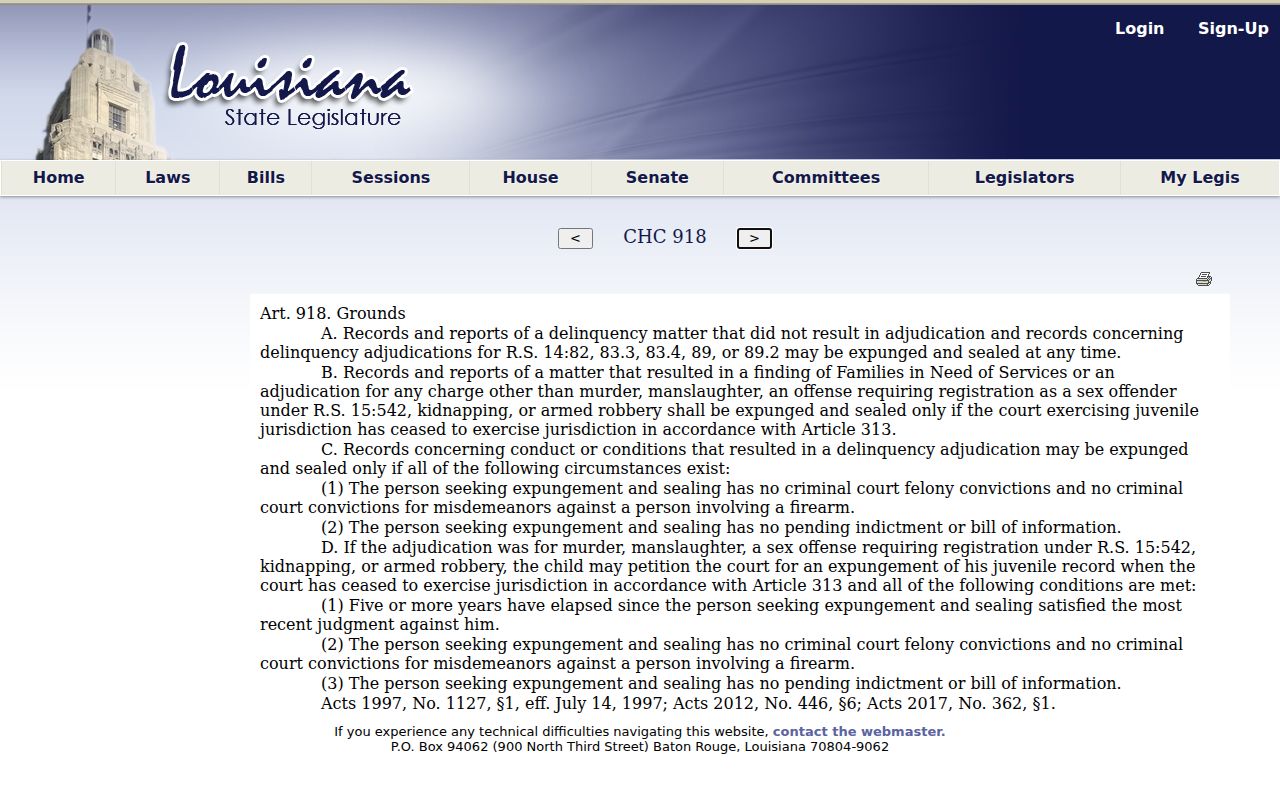
The official juvenile-confidentiality rules draw the line between public adult minute entries and protected juvenile court records.
Sealed Dockets and Public Access
Louisiana law puts court records in the Clerk's care. The public can generally examine or copy them during required office hours, with exceptions. The statewide criminal rule covers only qualifying minute entries or summaries. It does not open every filed image. It leaves traffic out. Sealed, expunged, juvenile, protected family, and other restricted material can be limited or simply absent. When a record will not come up, ask the better question: is it held by another court, or closed by statute or order?
Key rules: La. Code Civ. Proc. art. 251 identifies the Clerk as custodian and permits examination or copying unless an exception applies.
La. R.S. 44:31 provides the general public-record inspection and copying rule.
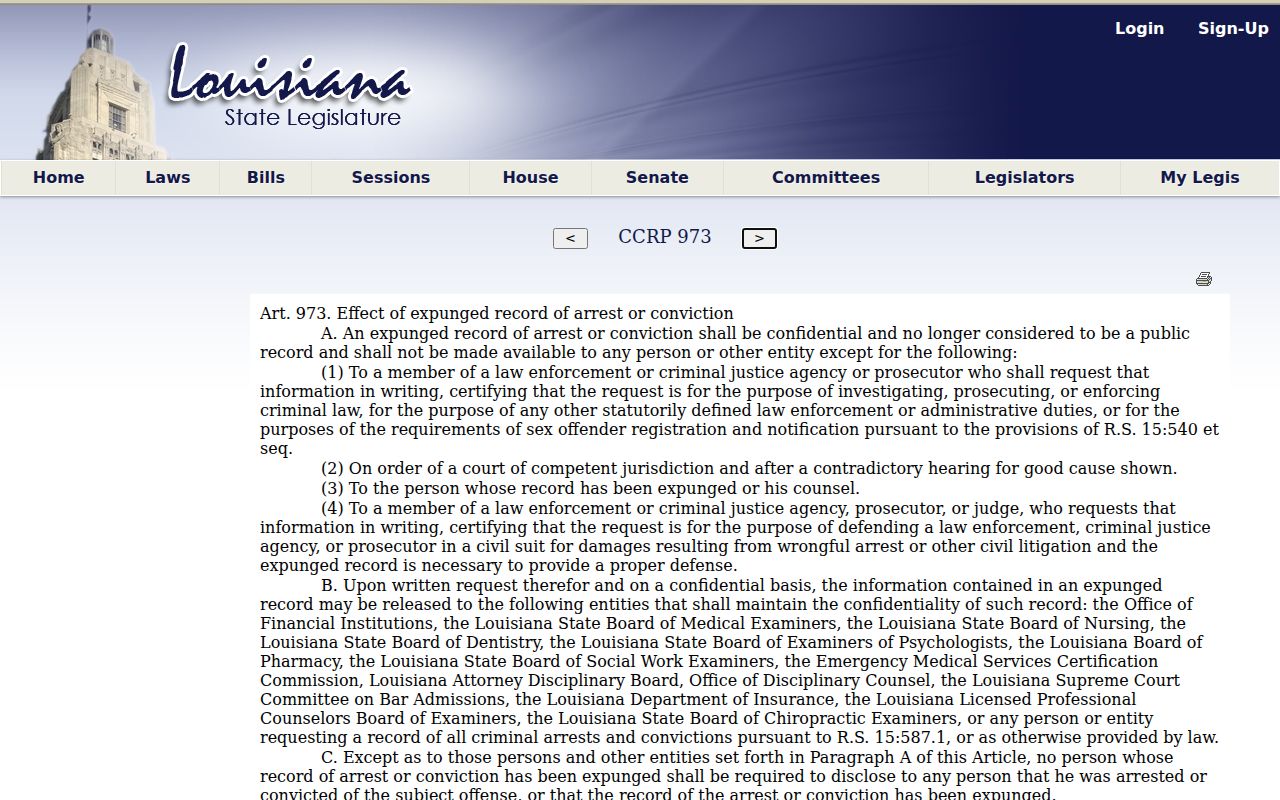
La. Code Crim. Proc. art. 973 makes an expunged arrest or conviction record confidential except for listed access.
Expungement pulls a record out of ordinary public access. A sealed record may show only limited information, or nothing at all. The Clerk can tell you the filing counter and the current fee, though an access order or authorized status may still be required. The expungement confidentiality statute sets out the rule on public availability after expungement.
For public records work, use the docket to follow a case or request a filing. Then verify the result with the court that maintains it.
LaSalle Parish Criminal Docket Copy Requests
Finding a docket entry is not the same as holding an official copy. Once you locate the case, give the Clerk the case number, caption, record type, and date range. Say whether you want a plain or certified copy. The Clerk's schedule lists other filing charges too. The posted record-access charges run $20 for a search and $1 per plain-copy page. Certification costs $5 plus $1 per page. A minute entry costs $5. Those are filing costs, not search or copy fees.
After a phone call, written requests can go by mail or fax. The Clerk's web contact form works for an initial message. A formal public-records request should describe the record narrowly and include delivery preferences and contact information. The official LaSalle materials publish no certified-copy request form, no public-records form, no payment method, and no turnaround promise. Confirm those details before you send funds or drive over.